
Two Homes and Transitions
Each transition is a moment of reorientation:
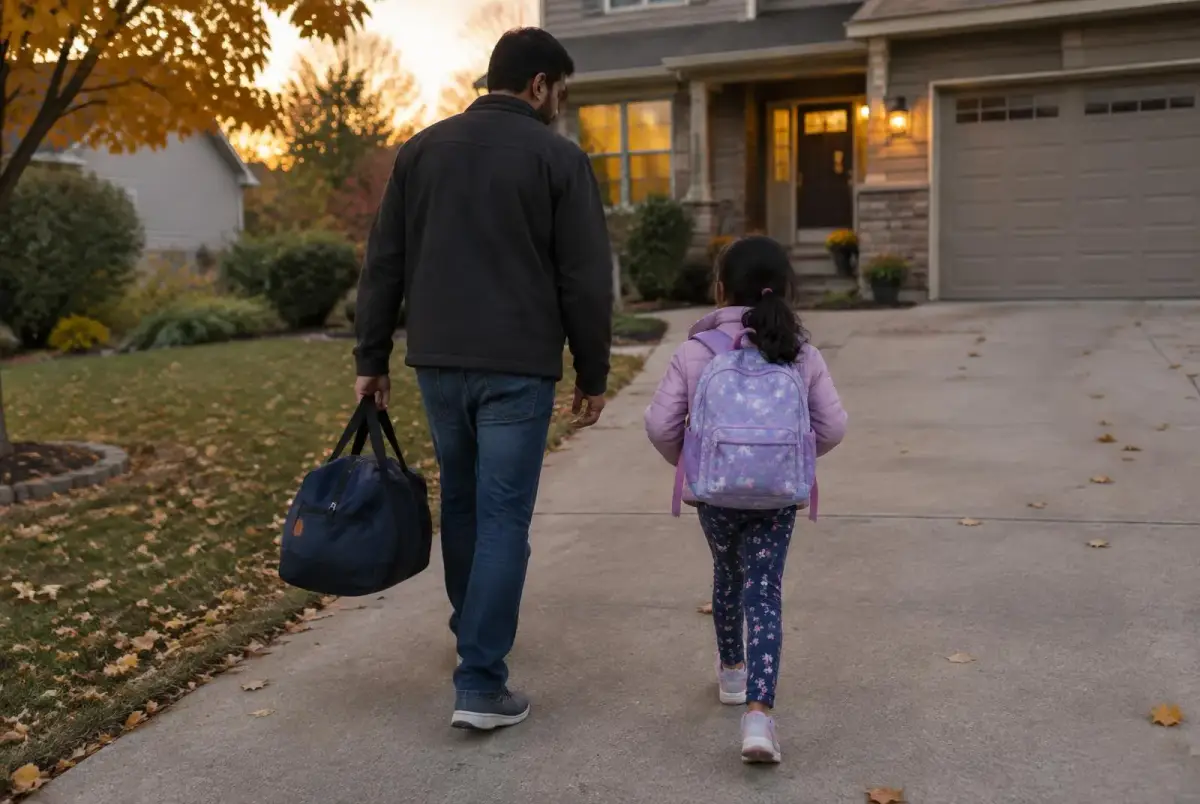
On the surface, moving between two homes is about logistics: drop-off times, backpacks, and making sure the soccer cleats don't get left behind. Inside, your child is asking: "Who am I with now? What are the rules here? Where do I fit in this space?"
Children are constantly scanning for safety and connection. When they move from one home to another, they're not just changing beds; they're shifting between two emotional environments.
You might notice it in:
What they share
And what they quietly hold back.How they transition
The hour before a pickup, the quietness after.Their energy
When they walk through the door.
These invisible questions shape their sense of loyalty, safety, and belonging
"Is it okay to miss Mom when I'm with Dad?" or "If I'm happy here, does that hurt my other parent's feelings?" These invisible questions shape their sense of loyalty, safety, and belonging.
Two Homes, One Childhood
Create consistency between homes with aligned routines, expectations, and agreements. Using similar routines for bedtime, homework, and screen time means your child doesn't have to constantly adjust the basics. Sharing important information keeps your child from becoming the messenger.
Handoffs, holidays, and schedule changes

Build in a little "landing time"
A snack or a short walk when your child arrives, before chores or questions. Invite your child to share how they feel about living in two homes, and listen more than you speak.
Peaceful handoffs
Peaceful handoffs reassure children that they do not have to choose sides.
You are safe to love both of us.
Let your child love the other parent out loud.
FAQ
What can I say on switch days?
"Some kids feel a little mixed up on switch days. How is it for you?"
What should handoffs look like?
Calm and brief, with no adult conflict at the curb or the front door.
Do both homes need the same rules?
No. Different rhythms and routines are normal. Children can adapt to differences.
My child says they're fine. Should I worry?
Believe them, and stay curious. Ask, "Is there anything that would make going back and forth feel easier?"